

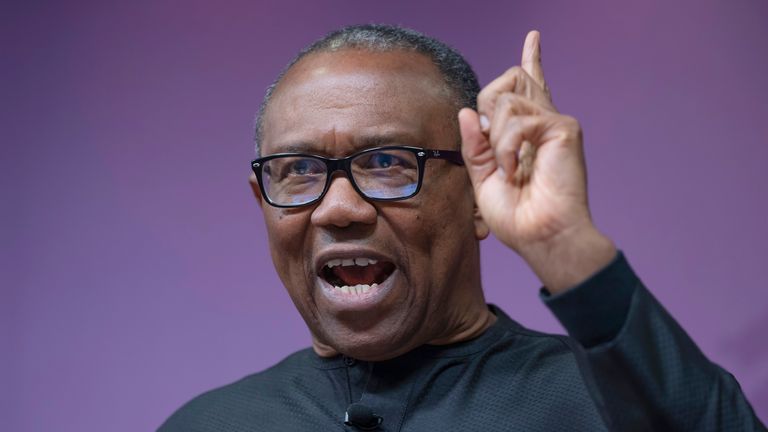
Peter Obi Condemns Attacks on Cardinal Onaiyekan
The presidential candidate of the Nigeria Democratic Congress (NDC), Peter Obi, has spoken out against the recent attacks on Cardinal John Onaiyekan and the Catholic Bishops’ Conference of Nigeria (CBCN). He criticised the vilification of religious leaders who voiced concerns about the country’s deteriorating situation.
Obi warned that Nigeria’s challenges are deepening each day, referencing a remark attributed to former United States President Donald Trump, who reportedly described Nigeria as “a now disgraced country.” He said the growing intolerance toward truthful commentary is a sign of worsening governance.
The CBCN’s Principled Stance
He emphasised that the Catholic Bishops’ Conference has never acted as an opposition party. Across military regimes and democratic administrations, the CBCN has consistently offered a principled voice, praising governments when warranted and speaking out when the national conscience demanded it.
Obi noted that other religious bodies — including Jama’atu Nasril Islam, the Supreme Council for Shari’ah in Nigeria, the Christian Association of Nigeria, and the Nigerian Supreme Council for Islamic Affairs — have also repeatedly raised alarms about insecurity, inflation, unemployment, and the rising cost of living.
Lessons from His Own Governorship
Drawing from his experience as governor of Anambra State, Obi recalled working with a strong Council of Traditional Rulers and various religious groups that regularly critiqued his administration. He said those honest exchanges contributed significantly to successes in education and health.
He described the attacks on Cardinal Onaiyekan as disturbing, pointing out that even during the military era, Pope John Paul II criticised General Sani Abacha’s regime without facing public vilification.
A Call for Honest Feedback
Obi contrasted President Tinubu’s outward respect for the Catholic Church — demonstrated during the inauguration of Pope Leo XIV in Rome — with the harsh reactions from the President’s aides and supporters toward Nigerian Catholic leaders who raised legitimate concerns.
He urged the administration to address the issues raised — worsening insecurity, deepening poverty, crippling inflation, struggling businesses, and fading hope — rather than shooting the messengers. According to Obi, reducing the bishops’ comments to a religious matter ignores that these challenges affect every Nigerian, regardless of faith or ethnicity.
He warned that surrounding leaders with sycophants erodes good governance. “When governments punish truth‑tellers and reward flatterers, honest advisers withdraw, sycophancy thrives, and leaders lose touch with reality,” Obi said.
The former governor concluded by urging religious leaders to continue speaking on national issues, stating that silence in the face of suffering would be a abandonment of their moral duty. He also advised those around President Tinubu to provide honest assessments of the nation’s condition instead of mere praise.