

A Nigerian pastor recently opened up about a habit from his younger Christian years, acknowledging that what he once viewed as sincere spiritual dedication ended up bothering those nearby.
He shared his experience on Facebook, explaining that his enthusiasm and limited understanding led him to interpret complaints about his boisterous early‑morning prayers as signs of persecution.
Feeling Targeted by My Own Prayers
He described how he used to rise before dawn to pray aloud, believing it was a meaningful quiet time with God.
Over time, he realized that his vocal prayers had turned into a disturbance for people living in the same compound.
Family Reaction to the Early Morning Noise
Recalling an incident at home, he said his late mother repeatedly pointed out that his early‑morning prayer routine was interrupting others’ sleep.
In contrast, his father often stood up for him, insisting that he should be allowed to worship in the manner he understood at that stage of his faith.
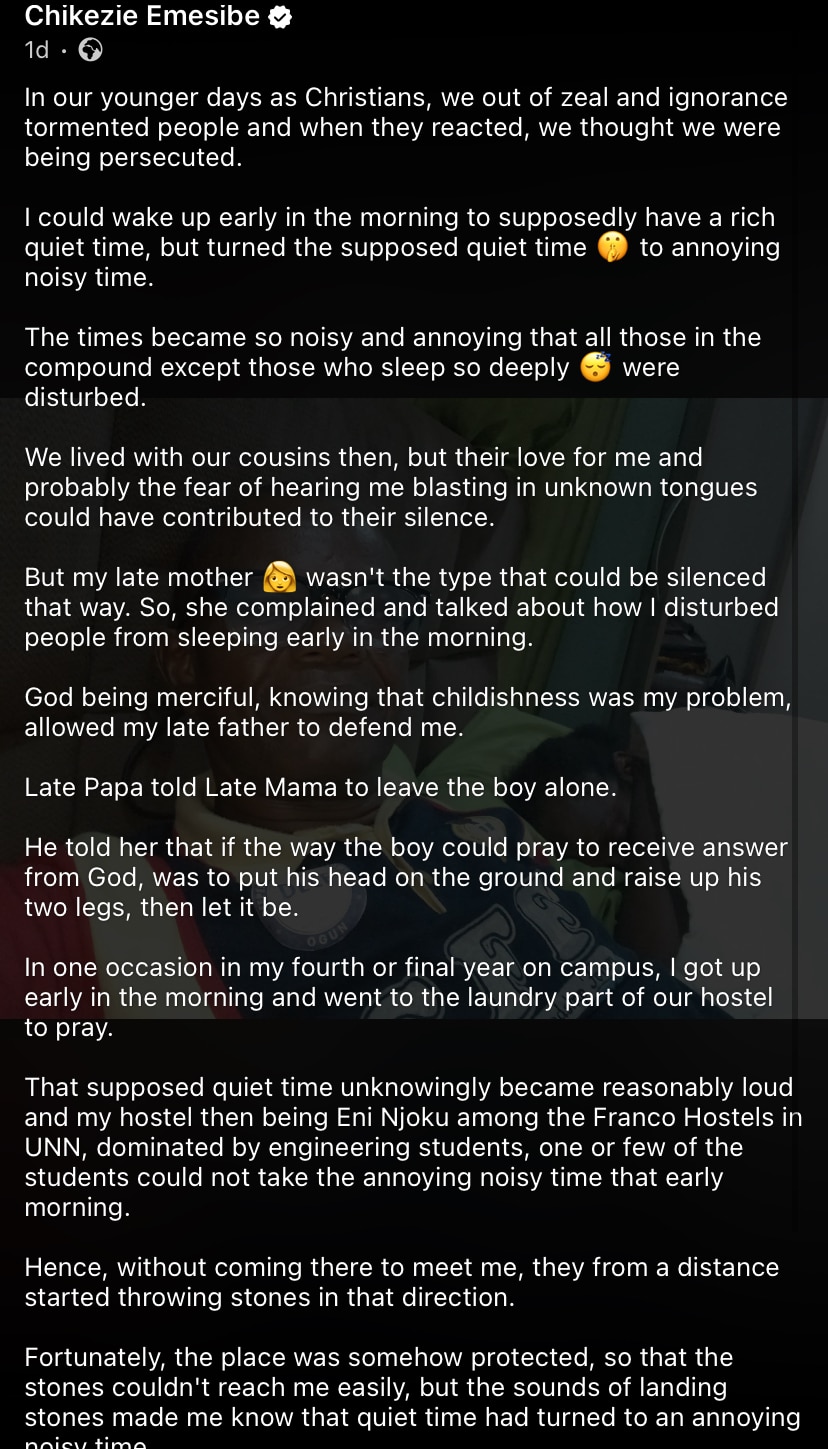
He recalled, “In our younger days as Christians, we acted out of zeal and ignorance, unintentionally upsetting those around us. When they reacted, we mistook their response for persecution. I would wake early to seek a deep quiet time with God, but my prayers grew loud and became a noisy annoyance. The clamor was so intense that everyone except the deepest sleepers was disturbed. Living with cousins, their affection for me—and perhaps their fear of hearing me speak in unfamiliar tongues—kept them silent. My mother, however, could not stay quiet; she voiced her concern about how I was preventing others from resting. God, knowing my immaturity was the issue, let my father defend me. My father told my mother to leave me alone, saying that if the only way I could reach God was by placing my head on the ground and lifting my legs, then let it be. During my final year at university, I went to the hostel laundry area to pray early one morning. What was meant to be a quiet moment unintentionally turned into an audible disturbance; the engineering‑student‑filled Eni Njoku residence could not tolerate the racket. Without confronting me, some residents began throwing stones from afar. Although the stones never reached me, the sound of their impact made clear that my devotional time had become a noisy nuisance. Had any stone struck me, it might have looked like persecution, yet the truth was that I was the one disturbing them, and they responded in kind. Today, I can even share a room with royalty without my quiet time turning into a disruptive noise.”
See below:
About the Author