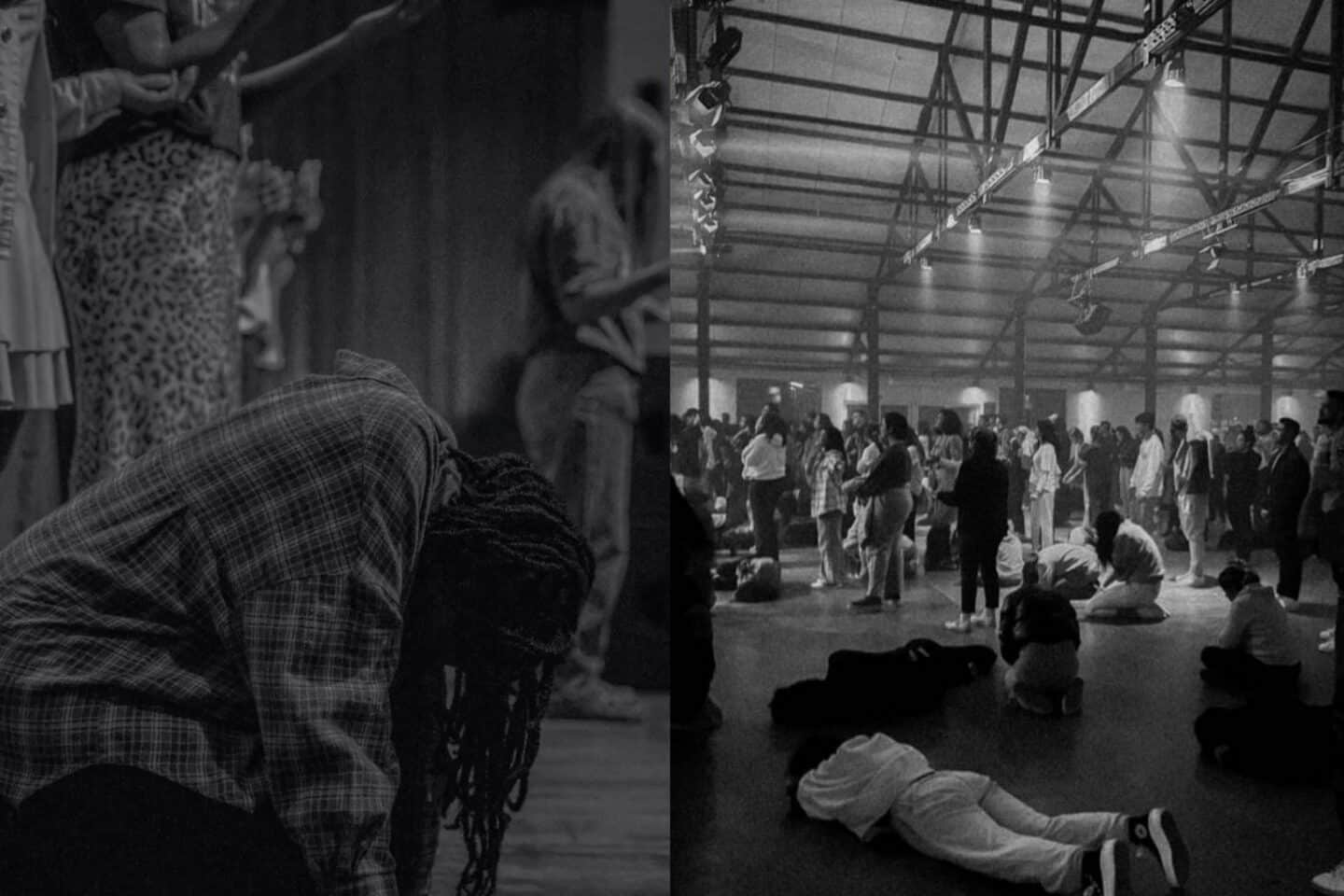
Media figure Adigun ignited online debate by condemning the rising practice of church photographers capturing worshippers’ images during services without obtaining permission.
His viral post revealed his irritation when he found a photo of himself, taken during a worship service, posted on his congregation’s Facebook page.
His remarks struck a chord with numerous netizens, reviving conversations about personal privacy, consent, and the expanding role of photography in religious settings.
Adigun Describes How He Found His Image Online
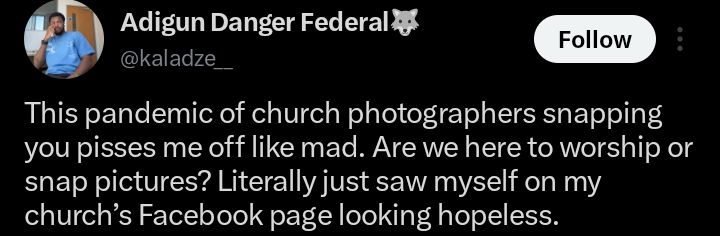
Voicing his frustration, Adigun commented, “This epidemic of church photographers snapping photos infuriates me. Are we gathered to worship or to take pictures?”
He then explained what prompted his reaction.
He later remarked, “I literally saw myself on my church’s Facebook page appearing hopeless.”
The message spread rapidly, prompting many users to share comparable incidents of being pictured in church‑shared photos without prior consent.
Divergent Opinions Follow the Viral Post
Adigun’s statement split online opinion. Some supporters urged churches to obtain consent before publishing worshippers’ images, whereas others contended that photography now serves as a tool for recording church events and fostering community involvement.
Numerous commentators proposed establishing media‑free zones within churches for those who wish to avoid being photographed, while others insisted that the act of worship should take precedence over picture‑taking.
The ongoing discussion continues to highlight the challenge of reconciling churches’ online presence with the privacy concerns of their congregants.
Below is the screenshot of the viral post.
About the Author