
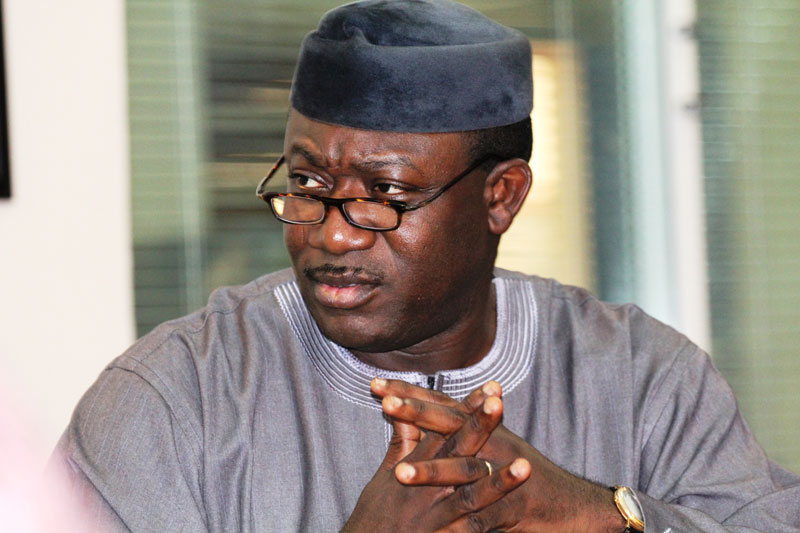
Former Ekiti State Governor Dr. Kayode Fayemi has declared that the All Progressives Congress (APC) has not progressed as much as he anticipated, despite being a member of the ruling party.
Fayemi made this statement during an interview on State Affairs, a podcast hosted by Edmund Obilo, where he discussed Nigeria’s development challenges and the current state of the nation.
The former governor, also the author of If This Giant Must Rise, acknowledged that some progress has been recorded but insisted the pace is too slow for a country with Nigeria’s potential and continental responsibilities.
Fayemi: APC’s Progress Below Expectations
“I am a member of the All Progressives Congress. Yes, we are not progressing. I would have loved us to have progressed further than where we are,” Fayemi said.
He added: “It’s not as if we are not making progress at all, but it’s so slow for a nation that has a manifest destiny to lead the African continent.”
The remarks come at a time of intense public debate over Nigeria’s economic direction, governance structures, and the role of political parties in addressing national challenges.
Call for Intentional Nation-Building
The former governor stressed that Nigeria must become more deliberate in organising itself as a country. He emphasised that nation-building is an ongoing process, but countries must remain committed to improving their systems and institutions.
“I think what we really ought to do is to be intentional about organizing our country. Yes, nation-building is always going to be unfinished. There’s no perfect union. Every nation is in search of this perfect union,” Fayemi explained.
He added that Nigeria’s size, population, and influence on the continent place a heavy responsibility on its leaders to pursue reforms that strengthen governance and development. Fayemi argued that development should not be left to chance, and that deliberate planning and purposeful leadership are essential if Nigeria is to fulfil what he called its continental destiny.
The former Ekiti governor noted that Nigeria still has the capacity to play a leading role in Africa, but achieving that leadership requires stronger commitment to progress, institutional reform, and national cohesion.