Critique of Symbolic Gestures
Wike specifically denounced Obi’s high‑profile visits to Internally Displaced Persons camps and charity homes on personal anniversaries, describing them as calculated public‑them as PR stunts rather than authentic compassion.
He added, “I was a governor. I have never attended birthday parties in an IDP camp. I’ve never gone to do my birthday with motherless homes simply because you want to be president, and people say, ‘Oh, this is the type of person we want.’ No, you are carried away with that kind of sentiment.”
Defending Hard Economic Choices
Beyond the personal critique, Wike distinguished populist rhetoric from the difficult decisions required for genuine national restoration.
He defended the controversial removal of the fuel subsidy, insisting that true leadership demands the political courage to enact painful but necessary reforms.
Wike noted, “When a situation is bad, worse, to the worst situation, people expect that problems that have taken over 15 years should be solved within one year.”
He concluded, “No decision can be 100 per cent right, but what makes leadership is the ability for you to take a decision. Nobody had that political will to say, ‘If this is bad, let us stop it.’”
Wike Accuses Peter Obi of Performative Politics
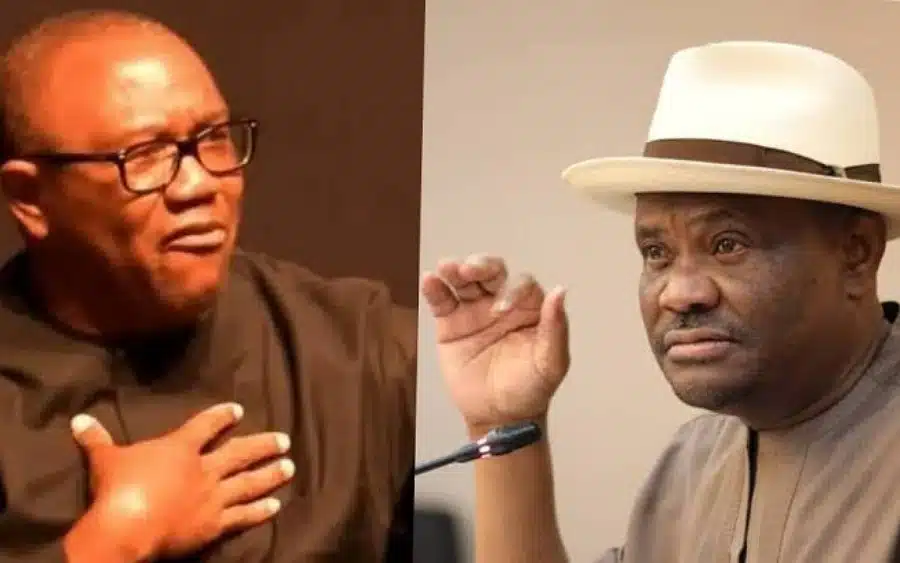
The Minister of the Federal Capital Territory, Nyesom Wike, has criticised the presidential candidate of the Nigeria Democratic Congress, Peter Obi, accusing him of engaging in performative politics rather than demonstrating genuine governing ability.
Wike argued that Obi’s actions are designed to win public sympathy instead of showing the capacity needed to lead the country effectively.
First‑Hand Knowledge Over Public Perception
Drawing on his personal experience, Wike said he knows Obi very well and bases his assessment on direct observation, not on popular narratives.
He stated, “I know Peter Obi very well. What I don’t like is playing to the gallery. What I am not used to, what I don’t do, or what I have not done, I won’t do simply because I want to be in power.”
Critique of Symbolic Gestures
The FCT Minister specifically –>
Wike specifically denounced Obi’s high‑profile visits to Internally Displaced Persons camps and charity homes on personal anniversaries, describing them as calculated public‑them as PR stunts rather than authentic compassion.
He added, “I was a governor. I have never attended birthday parties in an IDP camp. I’ve never gone to do my birthday with motherless homes simply because you want to be president, and people say, ‘Oh, this is the type of person we want.’ No, you are carried away with that kind of sentiment.”
Defending Hard Economic Choices
Beyond the personal critique, Wike distinguished populist rhetoric from the difficult decisions required for genuine national restoration.
He defended the controversial removal of the fuel subsidy, insisting that true leadership demands the political courage to enact painful but necessary reforms.
Wike noted, “When a situation is bad, worse, to the worst situation, people expect that problems that have taken over 15 years should be solved within one year.”
He concluded, “No decision can be 100 per cent right, but what makes leadership is the ability for you to take a decision. Nobody had that political will to say, ‘If this is bad, let us stop it.’”
About the Author