Dalung Questions How Fake PFIPC Director Gained Access to State House
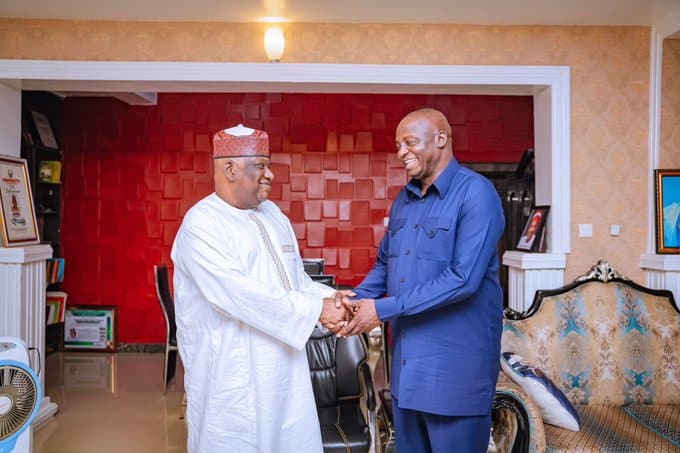
Former Minister of Sports Solomon Dalung has raised a fresh alarm after sharing a photograph that shows Adeniyi Adeyemi, who claims to be the Director‑General of the Presidential Foreign Intervention Promotion Council (PFIPC), standing alongside Vice President Kashim Shettima and other senior government figures.
Dalung asked, “What can you see? Should we also ask how the DG of a fake federal agency accessed the State House and enjoyed this level of proximity to the seat of power?” His comments follow Adeyemi’s arrest on a warrant issued by Justice Mohammed Umar of the Federal High Court in Abuja.
Adeyemi was scheduled to be arraigned on an eight‑count charge (FHC/ABJ/CR/562/2025) covering alleged forgery, fraud and impersonation. Although listed as case number 12 on the court’s cause list, he failed to appear for arraignment despite his lawyer, Genesis Francis, announcing his presence.
Allegations of ₦200 Million Bribe During Budget Defence
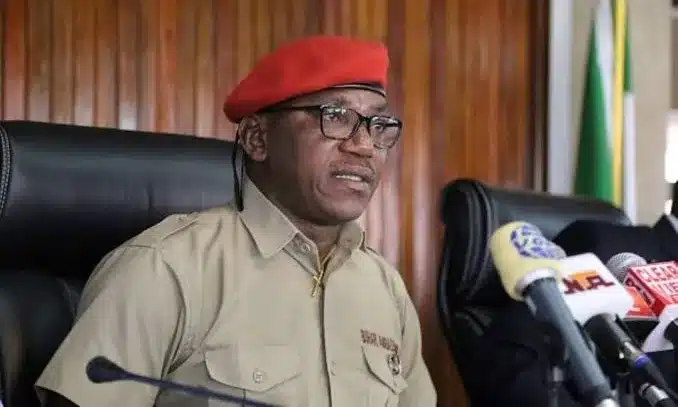
Dalung also revisited an earlier incident from his tenure under former President Muhammadu Buhari, claiming that members of the National Assembly demanded a ₦200 million bribe during his first budget defence.
According to the former minister, the request came shortly after he presented the Ministry of Youth and Sports Development’s budget proposal. He said he examined the documents and found no line item for a bribe, telling the lawmakers that without such provision he had no idea where to obtain the money.
Dalung stated that his response ended his participation in the meeting; the lawmakers told him to excuse himself and indicated they would continue discussions with the ministry’s Permanent Secretary. He alleged that after this episode his involvement in subsequent budget defences was sharply reduced, limited to giving an overview before being excused, while detailed talks proceeded behind closed doors.
He further claimed that the practice was not isolated to his ministry, alleging that some ministers perceived to be close to the Presidency routinely complied with similar demands to secure smooth passage of their budgets.
Dalung argued that legislative oversight has, in some cases, become a channel for personal enrichment rather than a mechanism for accountability. He warned that when constitutionally assigned oversight functions are swayed by illicit financial interests, transparency and accountability suffer, public resources are diverted, good governance is undermined, and citizens’ confidence in government institutions erodes.
The former minister noted that numerous corruption scandals involving ministries, departments and agencies persist because oversight bodies themselves are allegedly compromised.
About the Author