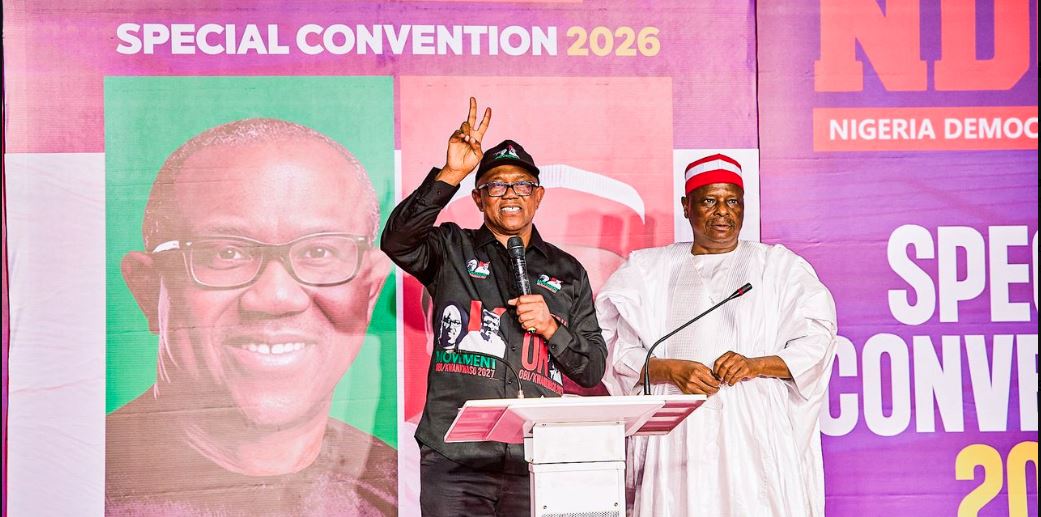
A leadership crisis has erupted within the OK Movement, the political group formed to mobilise support for the joint presidential ticket of Peter Obi and Rabiu Kwankwaso ahead of the 2027 general election.
The dispute became public after a statement signed by Jackie Wayas announced the appointment of former Inter‑Party Advisory Council (IPAC) chairman Peter Ameh as the movement’s National Director‑General.
Wayas, who described herself as the National Convener, said Ameh’s selection was unanimously approved during a steering‑committee meeting and cited his political experience and commitment to the group’s goals.
However, the announcement triggered objections from several members who questioned Wayas’ authority to act as the national convener, exposing a broader struggle over control and direction of the organisation.
Internal voices weigh in
Justin Ijeh, the immediate past National Publicity Secretary, told Punch that disagreements exist within the movement but urged that they be resolved behind closed doors to avoid damaging the Obi‑Kwankwaso ticket.
He stressed that while differences are normal in political organisations, airing them publicly could harm the larger cause, warning that the group cannot afford an internal battle while facing external opponents.
Ijeh said he had stepped down as spokesman pending resolution of the competing claims to the Director‑General office, noting that having two people claim the same post creates confusion.
Conflicting leadership claims
John Ughulu, the movement’s Director‑General, dismissed Ijeh’s assertions, stating that the former spokesman had been removed long ago and belonged to a rival faction attempting to hijack the organisation.
Ughulu accused the opposing camp of seeking to alter the OK Movement’s original purpose, which he said was conceived as a long‑term coalition to support Obi and Kwankwaso beyond the 2027 election, even envisioning activity in 2031 if Obi runs again.
He added that Peter Obi had privately asked him not to discuss the crisis publicly, pleading, “John, please, I beg you. Do not go to press. Do not say anything.”
Ughulu defended keeping the OK Movement’s leadership separate from that of the Obidient Movement, arguing that overlapping structures could create conflicts of interest and that the group was intended to attract Obi supporters who do not identify as Obidient members.
He traced the movement’s origin to consultations involving figures such as former President Olusegun Obasanjo and the late Akin Osuntokun, former Director‑General of the Obi‑Datti Presidential Campaign Council.
According to Ughulu, Ijeh was removed because his alleged partisanship with the Obidient Movement compromised his duties, while Jackie Wayas had previously worked under his leadership before their relationship soured over funding disagreements.
Ughulu claimed that disputes arose after he rejected certain funding sources, advocating instead for small contributions from ordinary Nigerians—suggesting N500 or N1,000 donations to cover posters, T‑shirts and logistics—and that coordinators should serve without pay.
Related controversies and responses
The controversy deepened when social media reports claimed that Obi had removed Yunusa Tanko, National Coordinator of the Obidient Movement Worldwide, over alleged financial misconduct. Tanko denied the reports, calling them false and an attempt to sow confusion.
Obi’s media office also rejected the allegations, accusing unnamed political opponents and disruptive elements of trying to create division within his support base and urging supporters to disregard rumours and fabricated stories.
Ladipo Johnson, former spokesman for the New Nigeria Peoples Party (NNPP), described the leadership dispute as a distraction rather than a threat to the movement’s survival, noting that Obi had been informed of the crisis and was unhappy with the developments.
About the Author