Atiku Abubakar Condemns ₦50,000 WAEC/NECO Fee Hike as Cruel
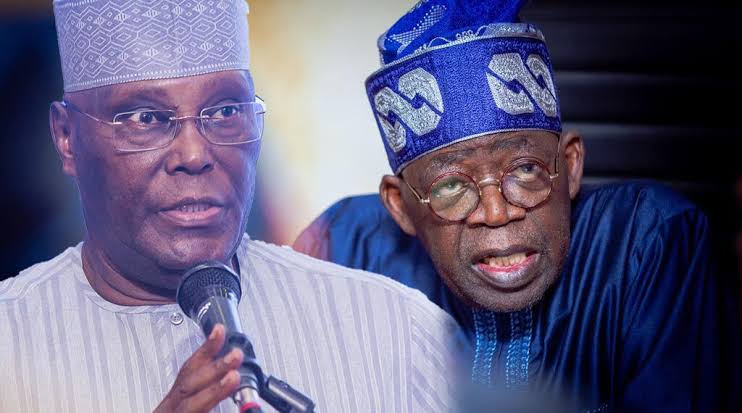
Former Vice President and presidential candidate of the African Democratic Congress (ADC), Atiku Abubakar, has strongly criticised the recent increase in fees charged by Federal Unity Colleges and the proposed uniform ₦50,000 examination fee for West African Examinations Council (WAEC) and National Examinations Council (NECO) candidates set to take effect from 2027.
In a statement released on Sunday by his Senior Special Assistant on Public Communication, Phrank Shaibu, Atiku labelled the increments as cruel, economically insensitive, and contrary to the Federal Government’s duty to make education accessible to every Nigerian child.
He warned that the additional financial burden would exacerbate the hardships already faced by families grappling with inflation, rising food and transport costs, high electricity tariffs, unemployment, and stagnant incomes.
Risk of Pushing More Children Out of School
Atiku argued that the policy could force more children out of school and deepen Nigeria’s education crisis, stating:
A government that genuinely believes in the future of its people does not erect financial barriers between children and education. It removes them.
Atiku Abubakar
He emphasised that education is a birthright, not a privilege reserved for the wealthy, and forms the foundation of prosperous nations.
Highlighting Nigeria’s already severe out‑of‑school problem, Atiku noted that between 10.5 million and 15 million Nigerian children and youths are currently outside the classroom, depending on the methodology and age group used.
The fee increase would disproportionately affect children from poor and middle‑income households whose parents are already struggling to meet basic needs. Every extra cost imposed on education, he said, could deny another child the chance to learn and improve their future.
Long‑Term Societal Consequences
Atiku warned that excluding children from education heightens their vulnerability to poverty, unemployment, child labour, criminal exploitation, drug abuse, and insecurity.
Every child priced out of education today becomes tomorrow’s victim of unemployment, poverty, child labour, criminal exploitation, drug abuse or insecurity.
Atiku Abubakar
He described the proposed ₦50,000 WAEC and NECO fee as a barrier that could prevent indigent but academically qualified students from progressing to tertiary institutions, noting that many low‑income families would lose the chance to compete for university admission simply because they cannot afford the qualifying examinations.
Atiku also criticised the inadequate investment in Nigeria’s tertiary institutions, pointing out that public universities lack sufficient lecture halls, laboratories, hostels, libraries, and other facilities to accommodate the over two million candidates seeking admission each year, while only between 500,000 and 700,000 spaces are currently available.
He characterised the combination of limited university spaces and higher examination fees as a “double punishment” for students from disadvantaged backgrounds:
The result is a cruel double punishment: first, millions of qualified young Nigerians cannot secure admission because there are insufficient spaces; second, many will now be priced out of even competing for those limited spaces.
Atiku Abubakar
He further questioned the Federal Government’s promotion of the Nigerian Education Loan Fund as a major achievement while the cost of obtaining secondary school qualifications rises, arguing that a university loan offers little comfort to a child who has already been priced out of secondary education.
Call for Immediate Action
Atiku urged President Bola Tinubu to immediately reverse the increases in Federal Unity College fees and the proposed ₦50,000 examination charge. He also called for an urgent meeting with education stakeholders to devise sustainable financing methods for public education.
The ADC presidential candidate advocated for increased investment in schools, recruitment of qualified teachers, improvement of educational infrastructure, and expansion of tertiary admission capacity. He pledged that an ADC‑led government would reverse policies that make education unaffordable and restore education as a public good.
About the Author