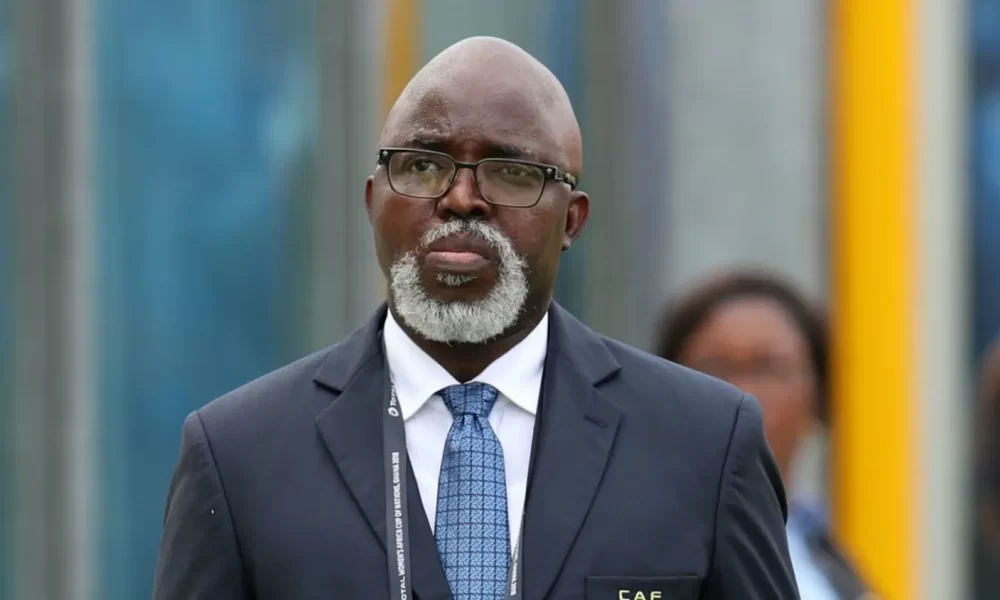
Amaju Pinnick, former President of the Nigeria Football Federation (NFF), believes the Super Eagles’ struggles to qualify for the 2026 World Cup are directly linked to the revised qualification format. He suggested Nigeria would have secured a spot if the 2018 system were still in place.
Pinnick shared these thoughts at the Big Sport Dialogue in Ikoyi on Monday. His comments came during a heated exchange with Abayomi Ogunjimi, the National President of the Authentic Nigeria Football and Allied Sports Supporters Club. This interaction became a focal point of the event.
Pinnick Responds to Criticism Over Qualification
Ogunjimi questioned Pinnick’s influence within CAF and FIFA. He highlighted the national team’s absence from the 2022 World Cup during Pinnick’s second term. The team now faces a similar fate for the 2026 edition.
Pinnick defended his leadership. He stated that the outcome of qualifiers should not be the sole measure of his tenure. “You said we did not qualify under me,” he responded. “We did not lose, and we did not win.”
He argued that the 2018 qualification structure offered stronger teams a fairer opportunity. He reminded the audience of Nigeria’s difficult group in 2018. “If they had followed the same format they followed in 2018,” he said, “where we were in the most difficult group in the history of football, with Zambia, Nigeria, Cameroon, Algeria, we had two games to spare and qualified for the World Cup.”
Recalling Past Achievements and Influence
Pinnick also pointed to significant results achieved during his time as NFF president. These included memorable wins against football giants like Argentina and Poland. He recalled a friendly match where England struggled against the Super Eagles.
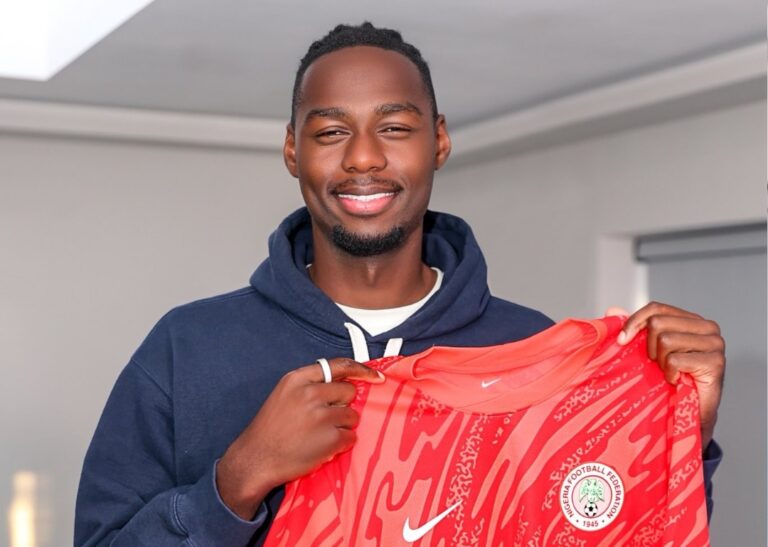
He further added that he personally championed the creative freedom behind the current Super Eagles jersey. “This jersey you are seeing today,” he noted, “I sat with Nike, and I told them to freestyle.”
His administration also secured unprecedented representation for Nigerians on CAF and FIFA committees. Pinnick claimed, “during my period as a member of the CAF Council, I had a minimum of twenty-five Nigerians in various committees. That was unprecedented.”
Behind-the-Scenes Work and Public Scrutiny
Pinnick explained that some of the work done behind the scenes was not intended for public disclosure. He stated, “There are some things that are better left unsaid. Those who know, know.” He highlighted that Nigerians now hold top positions, including in the FIFA ethics committee, and mentioned Aisha Falode in the FIFA media committee. “A lot of Nigerians did not get there by chance,” he added, emphasizing his role.
He expressed no issue with public scrutiny. Pinnick noted that tough questions are essential for Nigeria’s progress. “I will not begrudge anybody,” he remarked, “because if we do not ask the most difficult questions, we will not move from one point to the other.”
Despite Nigeria’s potential absence from the 2026 World Cup, Pinnick affirmed his continued commitment to supporting the nation. He pointed out his role as Vice President of the committee for the 2026 tournament. He described this position as “not just critical for Africa but critical to the world.”
About the Author